- Aristotle → Copernicus/Galileo: moved from qualitative teleology to mathematical, observational astronomy and experimental method.
- Copernicus/Galileo → Newton: unified celestial and terrestrial mechanics under precise laws (quantitative predictability).
- Newton → Maxwell: introduced fields as fundamental (not just particles under forces), and showed light is electromagnetic, prompting relativistic thinking.
- Maxwell → Relativity / QFT: Maxwell’s invariance of c forced a new kinematics (Einstein) and, at small scales, showed the need for quantum ideas.
- Classical (Deterministic) → Thermodynamics/Stat mech: introduced irreversibility and statistical descriptions for macroscopic phenomena.
- Classical (Deterministic) → Quantum: replaced deterministic trajectories with probabilistic wavefunctions — a radical epistemic shift.
- QM → QFT / Standard Model: extended quantum rules to fields and high energies, producing an extraordinarily accurate framework for particles and interactions.
- Standard Model & GR → Beyond: empirical gaps (gravity+quantum, dark components, fine tuning) motivate new unified frameworks.
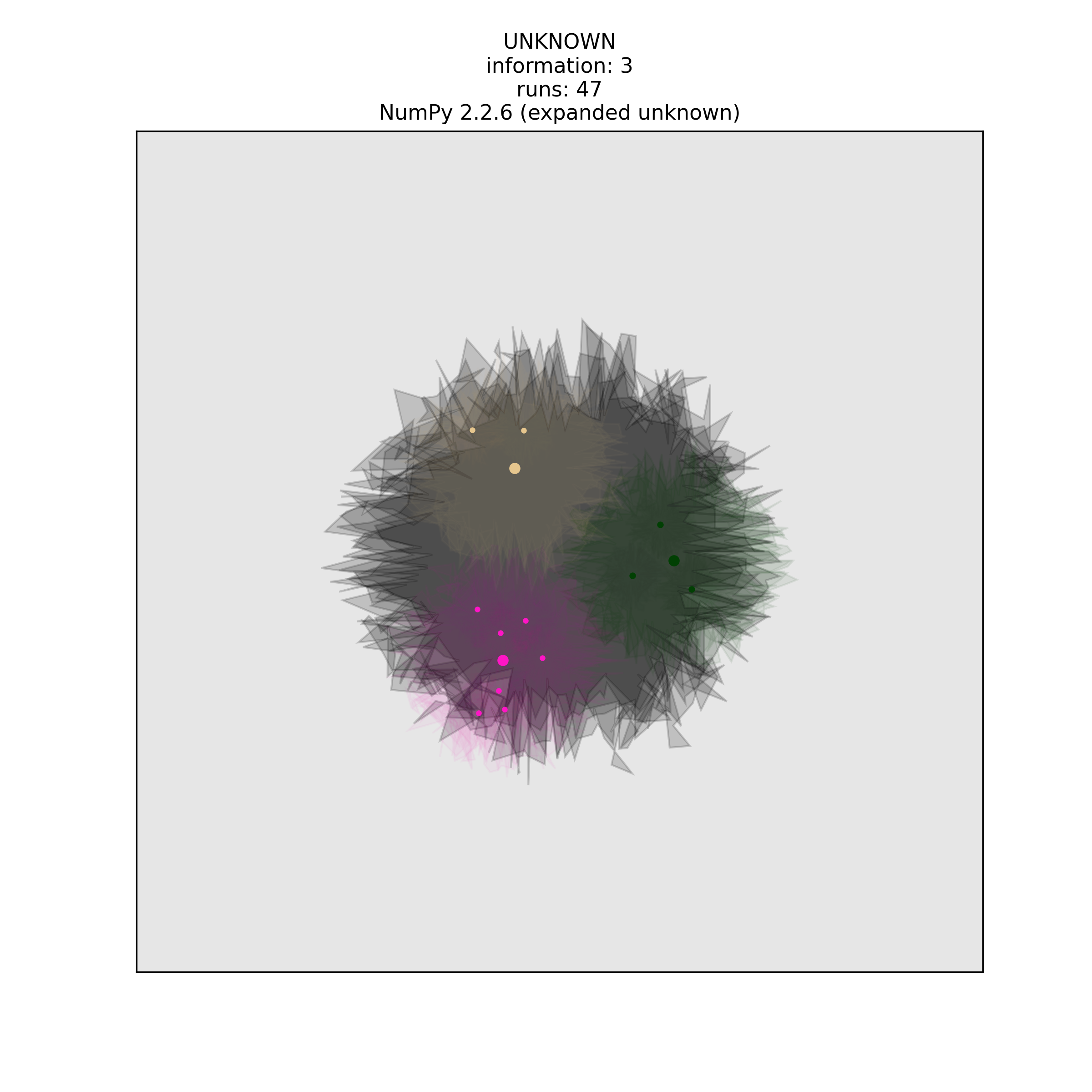
Where classical physics saw certainty and quantum physics saw probability, the Unknown stage recognizes structural openness — the possibility that even probabilities arise within a deeper, dynamic field.